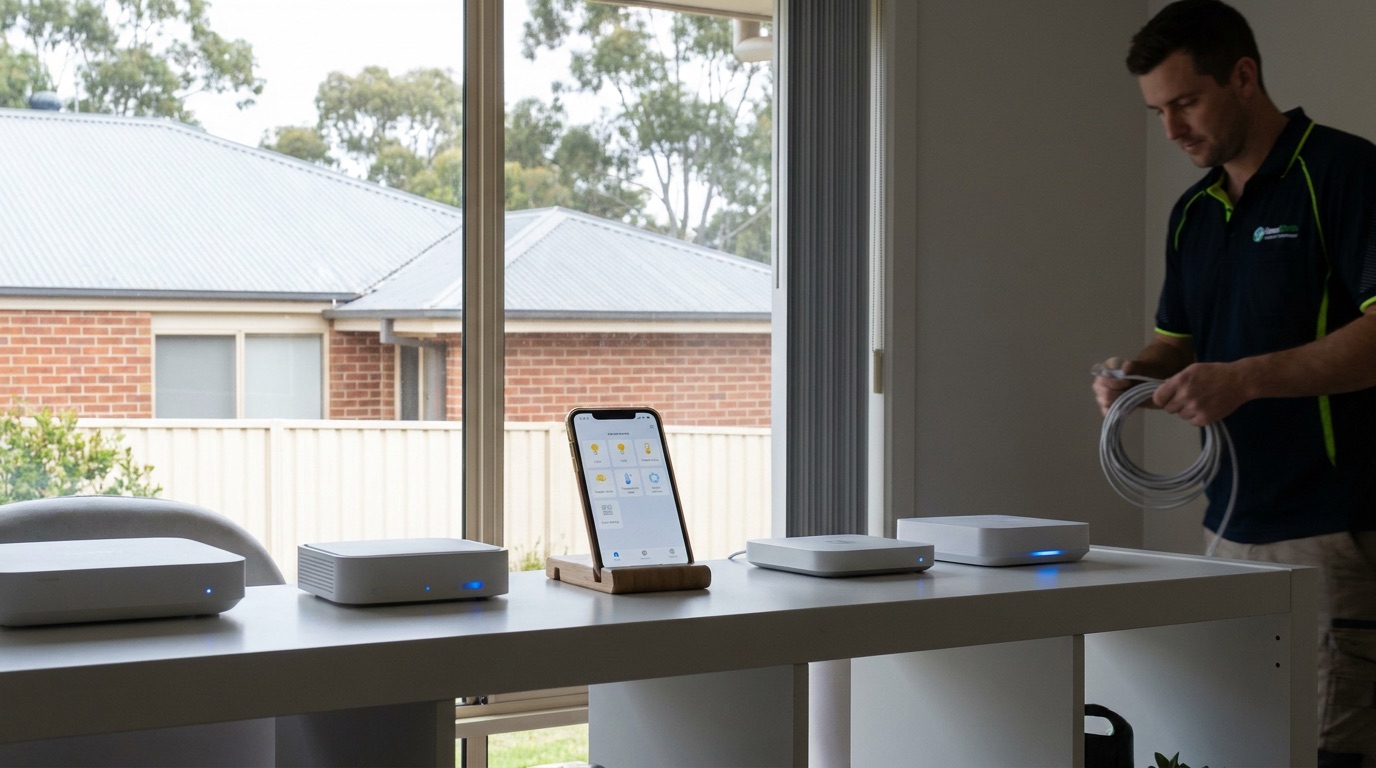
Why the ecosystem decision matters
When people buy their first smart device, they pick the product. When they buy their fifth, they start wishing they’d picked the platform. The ecosystem is the layer that decides whether your gear works together in one app or sits in five apps that ignore each other. There’s no single best choice, only the one that fits the phones you already own, the devices you want, and how much fiddling you enjoy. Here’s what the main options actually are.
The control platforms: Apple Home, Google Home
These are the apps and assistants that tie everything together and let you say “turn off the lights” or build routines.
- Apple Home (HomeKit). Tight, private, and reliable if your household is on iPhones. Setup is friendly, automations run locally on a HomePod or Apple TV, and Apple is strict about security. The trade-off is a smaller range of supported devices and an Apple-only experience, which is awkward in a mixed-phone household.
- Google Home. Works across Android and iPhone, has broad device support, and the voice assistant is strong. It leans more on the cloud, which some people don’t mind and others do. It’s a sensible default if your home isn’t all-Apple.
Either can run a good smart home. The honest answer to “which assistant” is usually: whichever ecosystem matches the phones in your house.
The connection standards: Matter, Zigbee, Wi-Fi
These aren’t apps, they’re how devices physically talk. You’ll often use more than one without thinking about it.
- Wi-Fi. Every device connects straight to your router, no hub needed. Simple to start and great for cameras and anything that moves a lot of data. The catch is that dozens of chatty Wi-Fi devices can load up an older network, which is another reason a solid home network and WiFi setup pays off before you scale up.
- Zigbee. A low-power wireless mesh designed for small devices like sensors, bulbs and switches. Devices relay signals for each other, so coverage actually improves as you add more. It needs a hub, but it’s robust, battery-friendly, and keeps your Wi-Fi uncluttered.
- Matter. The newer standard built to fix the “will it work with my system” headache. A Matter device is meant to work across Apple Home, Google Home and others, so you’re less locked in. It’s promising and improving steadily, though not every product or feature is covered yet, so it’s worth checking compatibility rather than assuming.
A quick way to picture it: Wi-Fi and Zigbee are roads the data travels on; Matter is a shared language more devices now speak; Apple Home and Google Home are the dashboard you actually look at.
How to choose without overthinking it
You don’t need to master all of this. Walk through it in order:
- Start with your phones. All iPhone? Apple Home is a comfortable home base. Mixed or Android? Lean Google Home.
- Favour Matter where you can. When a device lists Matter support, it’ll usually slot into whichever platform you chose and keep your options open later.
- Use Zigbee for the small stuff. For lots of sensors and battery devices, a Zigbee hub is reliable and gentle on your network.
- Keep Wi-Fi for the heavy hitters. Cameras and video doorbells belong here.
Most real homes end up mixing all of these, and that’s fine. The aim isn’t ideological purity, it’s one app you enjoy using with devices that respond when you ask.
Don’t let one bad device pick your ecosystem
A common trap is buying a discounted gadget, then bending the whole house around the only app it supports. Decide your control platform first, then choose devices that fit it. If you’re partway in and juggling several apps already, it can usually be tidied up by consolidating onto one platform and replacing the few stragglers that won’t cooperate.
If you’d rather not work through all of this on your own, our smart home automation team can recommend an ecosystem based on your phones, your home and what you want it to do, then install gear that’s known to play nicely together. Where any of it involves hardwired switches or mains-powered fittings, that electrical work is carried out by our licensed Level 2 electrical partner, Sydney Electrical Service, to AS/NZS 3000; Birch Tech is a registered cabler, not an electrician.
Want a second opinion before you buy?
Choosing an ecosystem is the one decision that’s genuinely hard to undo cheaply, so it’s worth getting right early. If you’d like help matching a platform to your household, call us for a free quote on 1300 287 256 and we’ll talk it through, no obligation.